
jing fu gong
Taoyuan JingFu Gong Temple
Introduction
Jing Fu Gong Temple in Taoyuan City, located in the city center, is both a religious holy site and a witness to cultural history. As an important center of faith in the Taoyuan area, the Jingfu Temple, known as the “Great Temple,” has long been integrated into residents’ lives and emotions. Moreover, the festival activities here have made it a popular highlight of cultural tourism.
The origin of the temple
In the past, settling new land was hard and dangerous. Because people weren’t used to the environment, they got sick and died easily. People from different hometowns often fought violently, they even killed each other over land and water rights. Because of this, many people turned to their faith and prayed for safety and protection. Even in today’s advanced science world, religion is still a great human achievement. It brings people hope and inner peace.
Time of construction
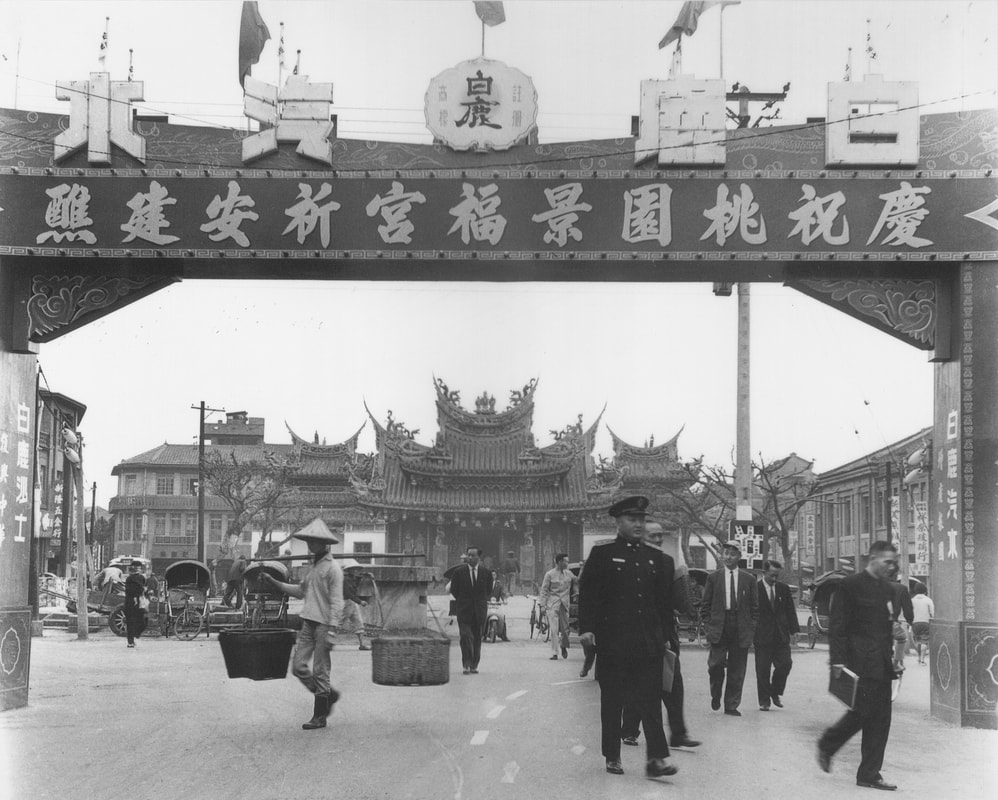
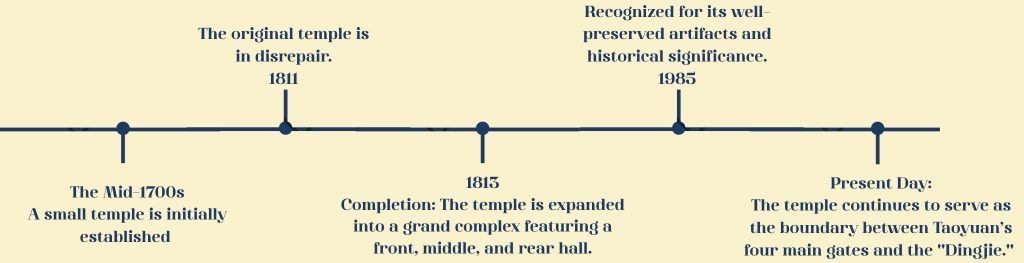
During the Jiaqing period, multiple violent clashes between settlers from Quanzhou and Zhangzhou broke out in the Nankan and Gueilunkou areas, causing a lot of injuries and death. Therefore, local residents organized and built “Taoyuan City”. At the same time, the region has experienced frequent outbreaks of epidemics, causing many people to fall ill and even die for unknown reasons. Due to the lack of advanced medical knowledge in the early times, people were helpless and could only pray to the deities for protection. In 1811, the sixteenth year of the Jiaqing Emperor’s reign, this nearly seventy-year-old temple had fallen into disrepair. Devout local residents and gentry, including Jian Yue, jointly raised funds to rebuild the temple located in the heart of Taoyuan City.
In 1813, the temple was completed and expanded into a magnificent complex, including a front hall, middle hall, and rear hall. The completion ceremony was grand and solemn, attended by numerous officials, including Xue Zhiliang, the deputy magistrate of Tamsui County, and Zhai Gan, the magistrate of Kavalan County. Today, three ancient plaques still hang in the temple—”Virtue and Purity,” “Virtue and Universal Salvation,” and “Success in Both Fame and Fortune”—witnessing the significant historical importance of the temple’s reconstruction. For over two centuries, JingFu Temple, the grand temple of Taoyuan, has been a thriving center of worship of the people of Taoyuan. For over two centuries, Jingfu Temple has been a landmark temple in Taoyuan and an important religious center for the city’s residents. It also marks the boundary between Taoyuan’s four main gates and the urban development center of the Dingjie and Xiajie areas. Jingfu Temple holds significant historical importance, and its well-preserved ancient artifacts led to its designation as a “Grade III Historic Site in Fujian Region, Taiwan” by the Ministry of the Interior in 1985, thus earning its protection under the Cultural Heritage Preservation Act.
Long history is the origin of culture
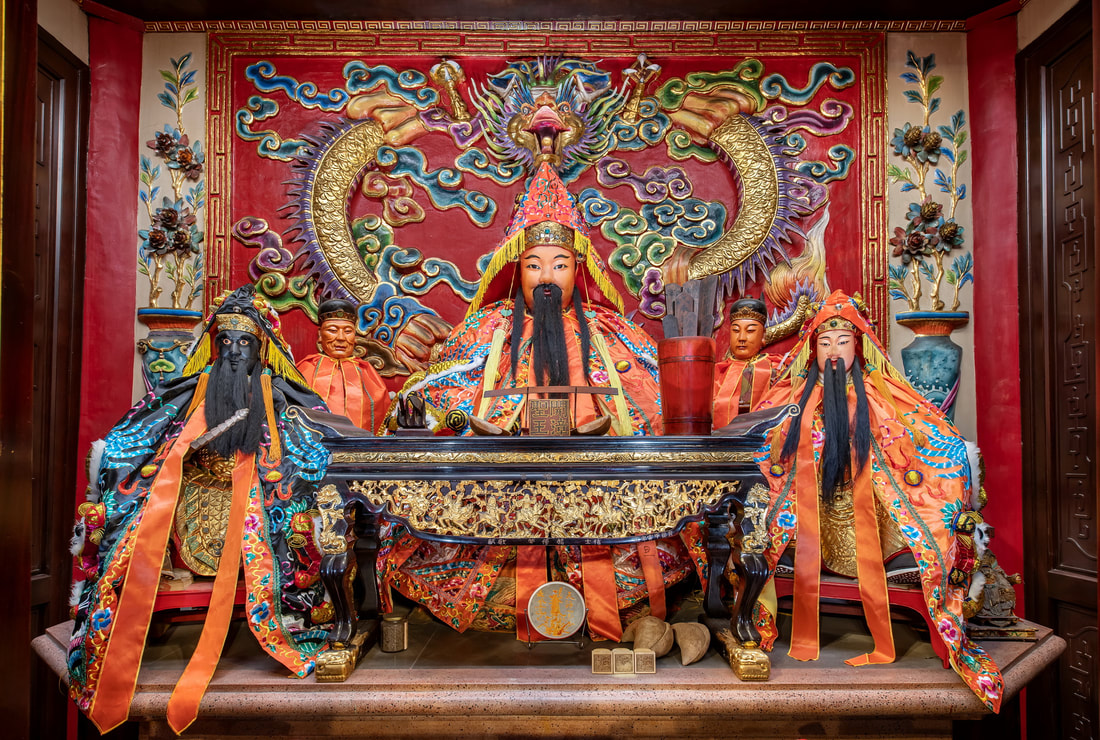
The history of Jing Fu Gong Temple dates back to 1745. It was built jointly by immigrants from Zhangzhou, Fujian. The temple is mainly dedicated to the Kaizhang Shengwang, and the source of incense comes from Zhangzhou. Later, with the increase in immigration in 1811, the original temple’s size was no longer sufficient to demonstrate the importance of its faith, so people decided to expand it.
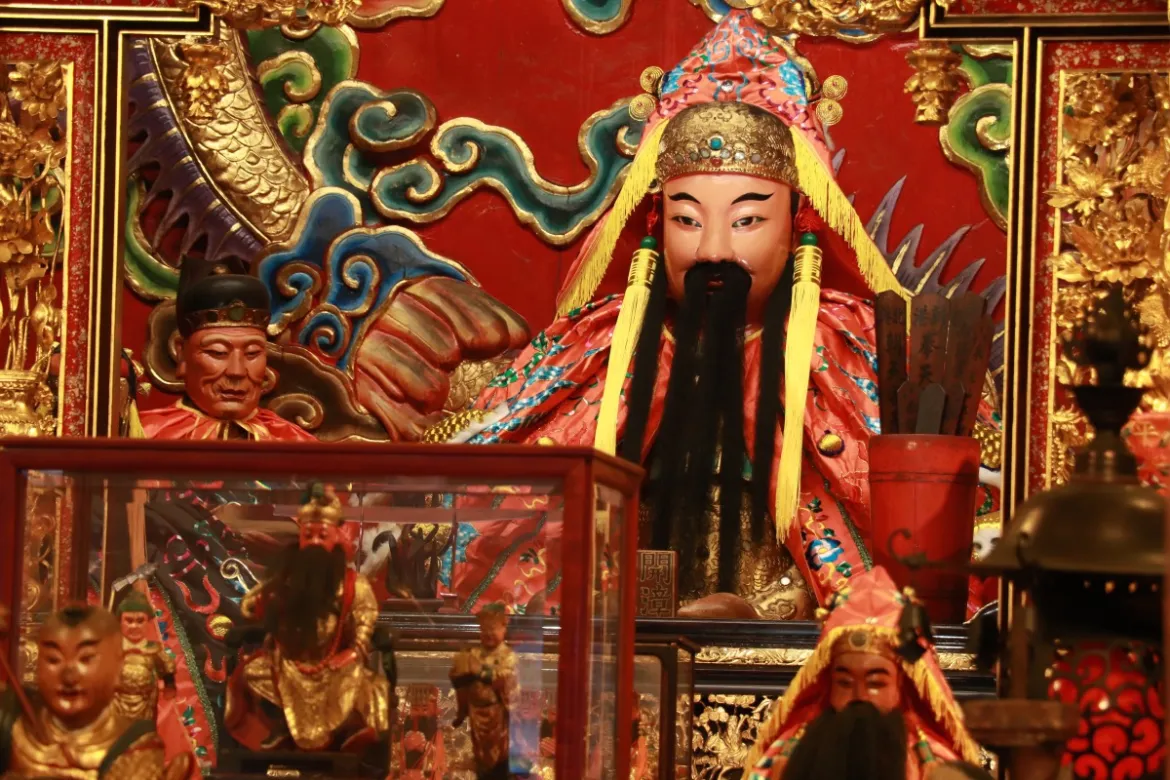
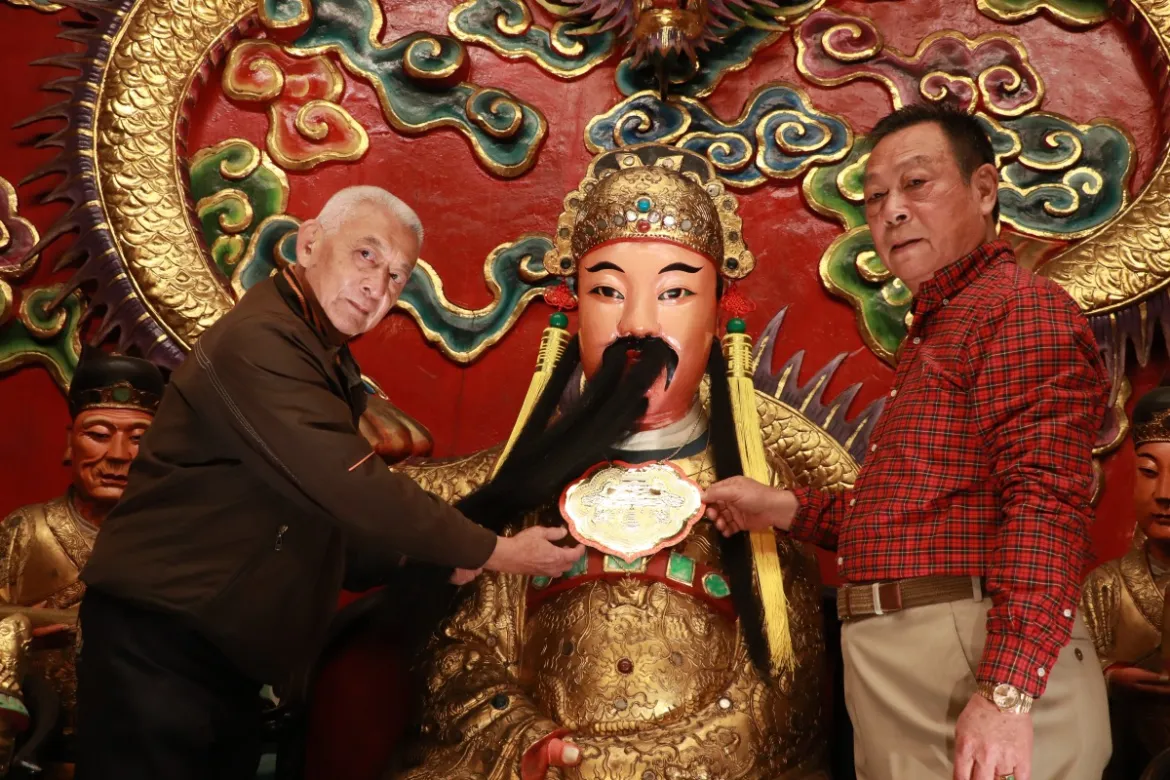
The expansion project started in 1811 and was completed in 1813 after two years of effort, expanding the temple to a three-hall scale. The rear hall, dedicated to Guanyin Bodhisattva, demonstrates the diversity of faith. This reconstruction also invited renowned artisans from Zhangzhou to carve seven statues to guard the temple. Among them, the statue of the holy Shengwang in the hall is the largest and most exquisite sculpture of the Kaizhang Shengwang in Taiwan’s Qing Dynasty. The statue is solemn and benevolent, making worshipers feel respected.
Architectural Features
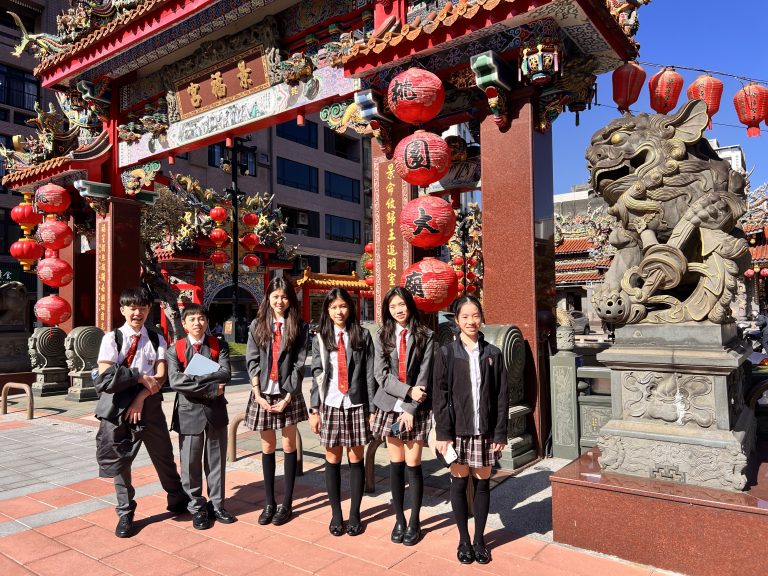
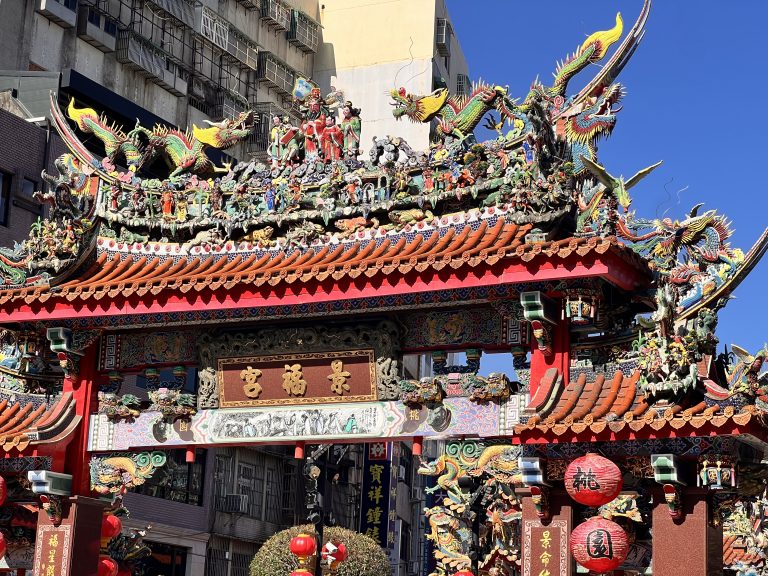
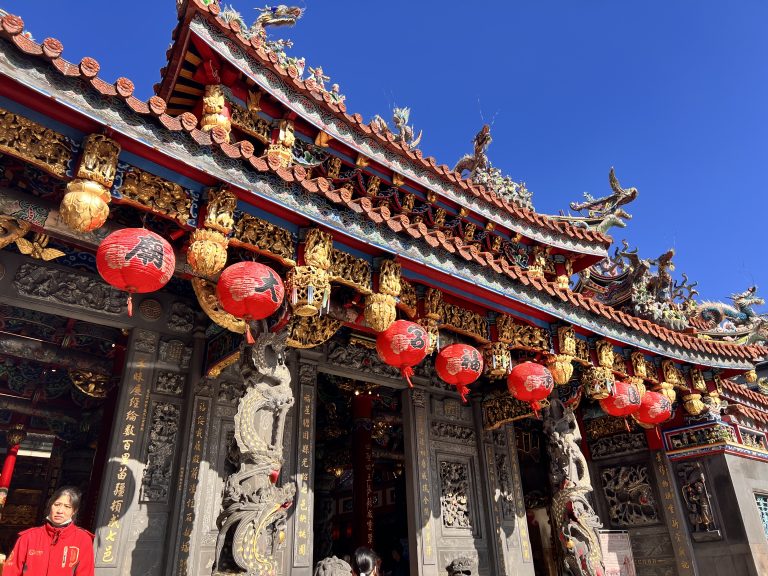
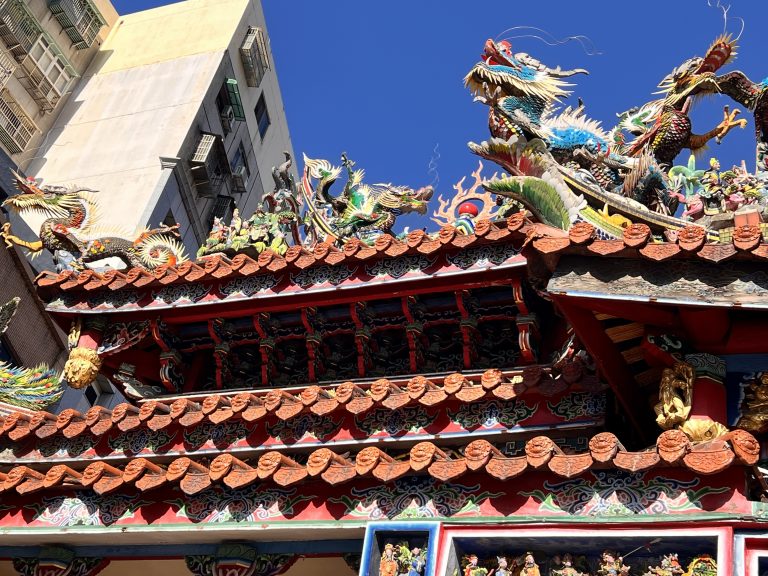
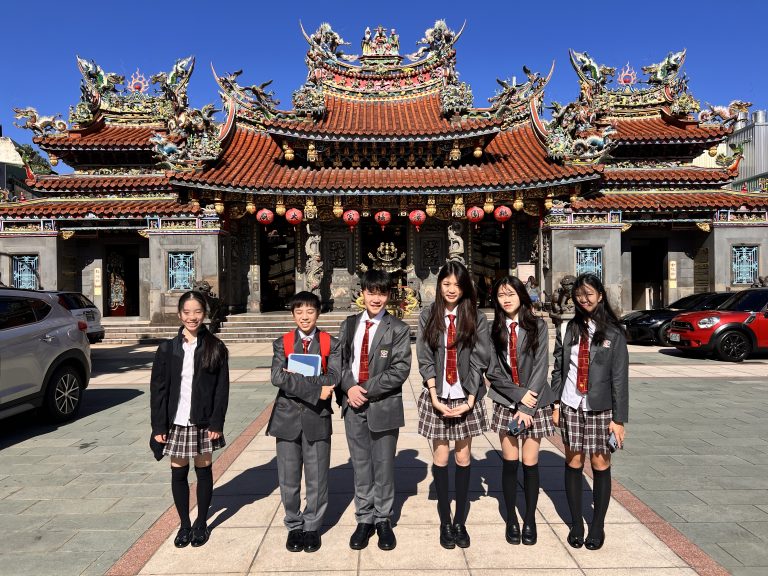
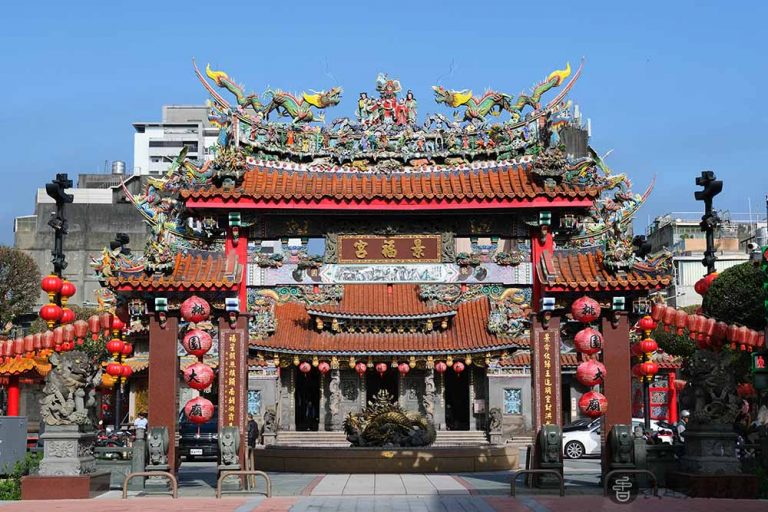
This project was designed by a famous Taiwanese master carpenter, Chen Ying- bin. The front hall was built by master craftsman Wu Hai-tong, and the main hall was constructed by Chen Ying-bin’s son, Chen Ji-yuan, and his team. The front and rear halls were built by different master craftsmen, each showing their unique strengths and talents. This “front and rear master-built competition” is rare in Taiwan and this is what makes JingFu Temple a masterpiece of traditional temple architecture. The roof design and wooden brackets make JingFu temple grand and impressive, fully showcasing the architectural characteristics of master craftsman Chen Ying-bin. In the temple, there are a lot of valuable historical items from the Qing Dynasty, such as plaques. couplets, altars, and candlestands, giving the temple greater historical and artistic value. Although JingFu temple is now surrounded by a lively and busy city, the temple still has a spacious plaza in front of it. There is a large archway at the front, with smaller archways on both sides, and a dragon-shaped fountain pool in the center of the courtyard. In recent years, JingFu temple completed its renovation as a municipal historic site in making the century-old temple look more solemn and beautiful at night. With the addition of water ripple lights and water mist effects, it has become a new highlight for people and citizens to rest, take a walk, and appreciate the historic site.
Main deity: Chen Yuan-guang
Chen Yuan-guang (657-711 AD), also known as Sheng Wang Gong or Chen Sheng Wang, is the guardian deity of the people of Zhangzhou. Born in 657 AD, during the 7th century Tang Dynasty in China, he showed great intelligence from a very young age. Born into a military family, he was a talented young general who led troops before he was twenty. He led troops to cultivate the southern part of Fujian, and in 686 AD, he founded Zhangzhou and became its first Governor. He is honored for opening Zhangzhou by leading the people to cultivate the land. Because of his love for the people and how he cared deeply for them, they honored him as their guardian deity. His birthday is celebrated on the 15th day of the second lunar month every year. The faith of his hometown also came to Taiwan with the footsteps of immigrants.